
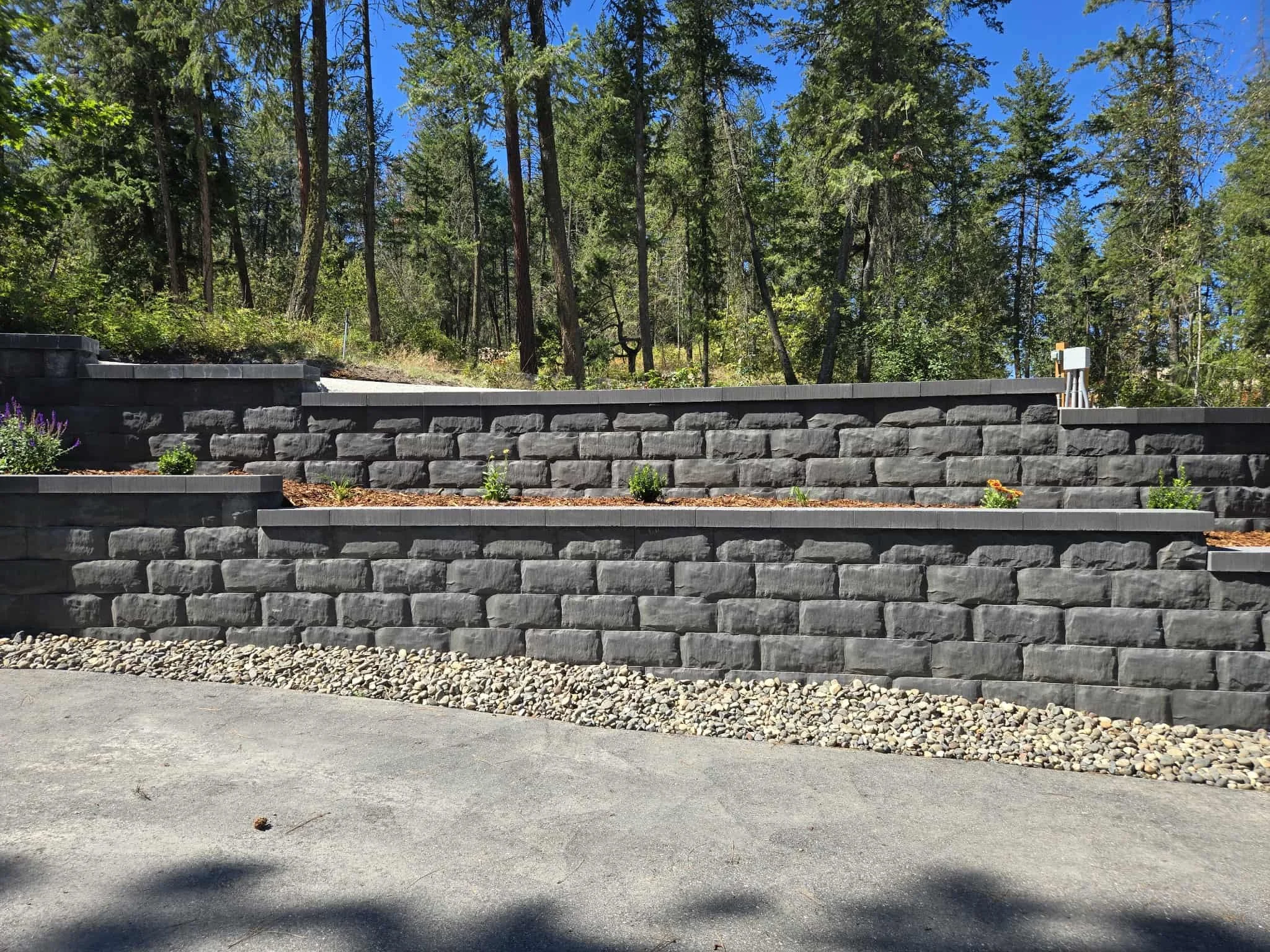
Retaining Walls
Solutions for Sloped and Uneven Properties
Retaining walls are often where a successful landscape begins. They create structure, manage grade changes, and make sloped or uneven properties usable. When planned and built properly, they also set the foundation for everything that comes after.
At Peacock Landscaping, retaining walls can be a project on their own, but they’re never built in isolation. Even when a wall is the primary scope of work, we plan for what happens above and below it so the surrounding landscape is properly restored and functions as intended.
On larger projects involving grading, access, or outdoor living spaces, retaining walls are often addressed early as a foundational step that allows everything else to come together.
When a Retaining Wall Makes Sense
Not every yard needs a retaining wall, but when grade changes are involved, they often become essential.
Retaining walls are commonly used to:
Manage sloped or uneven terrain
Create level areas for patios, walkways, or lawns
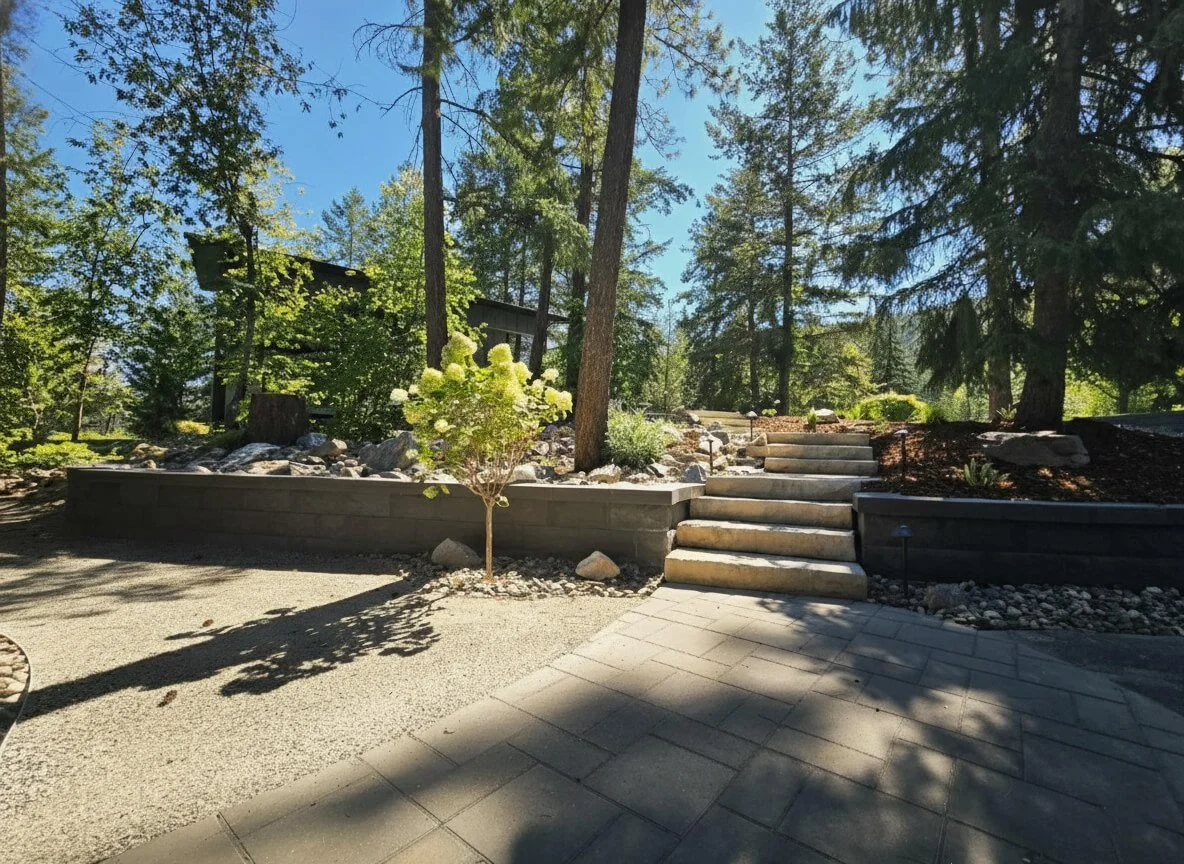
Support driveways, stairs, and other hardscape features
Control erosion and improve drainage
Define outdoor spaces within a larger landscape
We focus on areas where retaining walls are truly needed, how they should be built, and how they connect to the rest of the landscape. In practical terms, this might mean creating a level area for a patio where a slope once made the space unusable, or adding support behind a driveway or set of stairs for safety and access.
In many cases, retaining walls make it possible to use parts of the yard that would otherwise be difficult or unsafe. When everything is planned together, the result feels thoughtful and complete.
Choosing the Right Approach
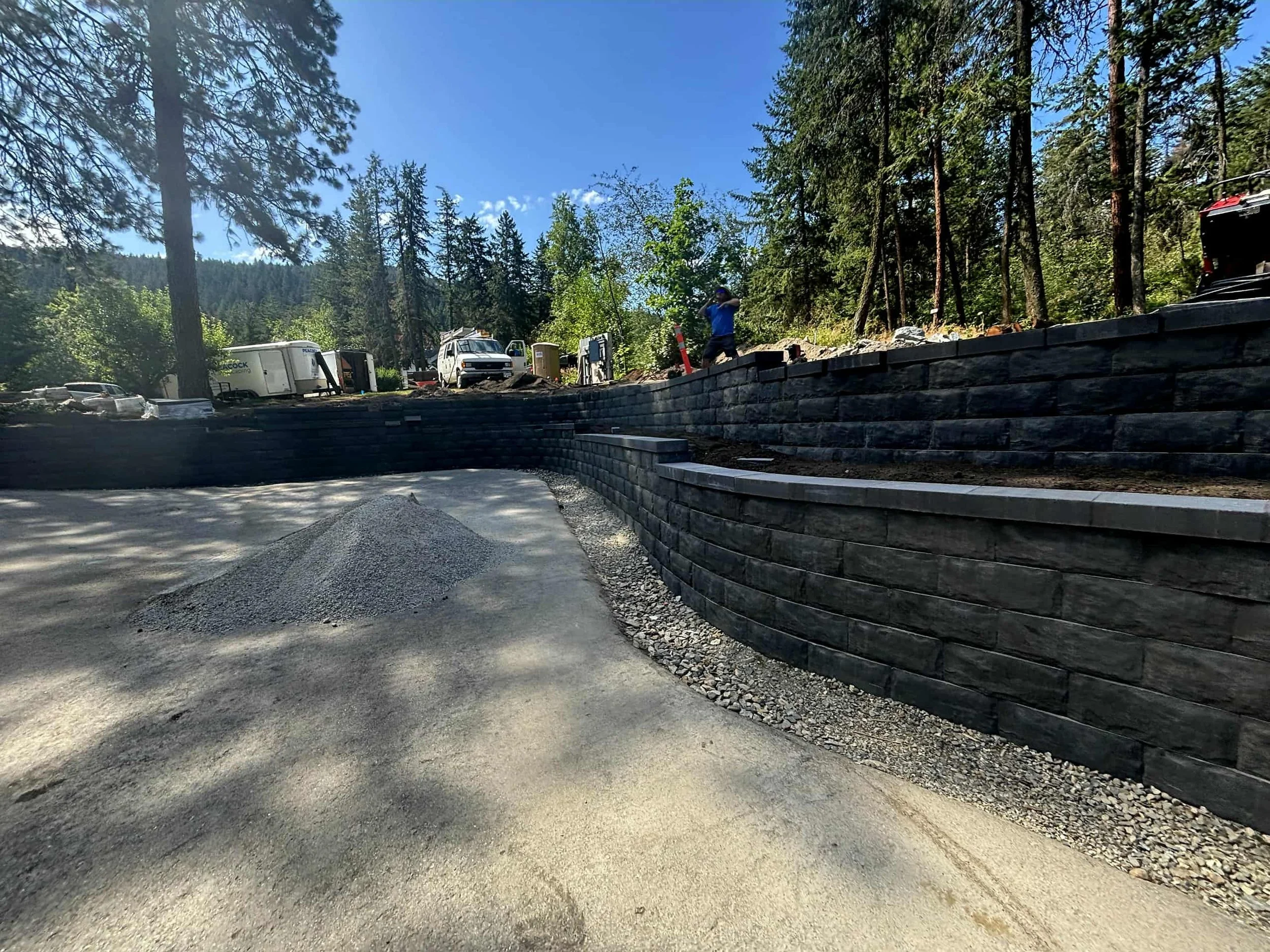
Every property has its own conditions, and retaining walls need to respond to them. The right approach depends on the grade change, how the space will be used, and how the wall fits into the overall landscape. For some homeowners, that means a low wall that blends into the landscape; for others, it may involve a taller structural wall that creates usable outdoor space.
We'll help sort through the options and choose an approach that suits the property now, and continues to perform over time.
Segmental Walls
Segmental walls are a common choice in residential landscapes because they’re flexible and reliable. They work well where clean lines or gentle curves are needed and are often used alongside patios, walkways, and steps.
Stone Walls
Stone walls offer a more natural look and can suit certain properties particularly well. When built properly, they blend into the landscape while still providing the strength needed to manage grade changes.
Structural Walls
Some sites require a more engineered solution. For retaining walls over four feet tall, we work with an engineer to assess the site and provide an approved wall plan. This is coordinated through our team, so the homeowner doesn’t have to worry about the process, and the wall is built to suit the site conditions.
What You Don’t See Matters
A retaining wall’s performance depends on what’s happening below the surface. Proper preparation and drainage are what keep walls stable and prevent issues over time.
Our work includes:
Assessing soil conditions and drainage
Building a solid base and footing
Managing water behind the wall
Sequencing construction so that walls support nearby features
Every site is different, so materials and construction methods are chosen to suit the conditions. Rather than forcing one system, we focus on choosing the right style and building materials to help avoid common issues such as movement, cracking, or drainage failure.
Featured Projects
A look at how a retaining wall’s structure, grading, and design come together across different properties and site conditions.
Tell Us About Your Project
Not every project needs the same starting point. Choosing the right first step helps set expectations and keeps the process moving smoothly.
Start Your Design
Best for full yard transformations, new builds, or projects that benefit from a clear design and construction plan.
Start Your Estimate
Best for smaller projects that do not require a full design. We provide an on-site consultation to review the scope, cost, and recommendations.