
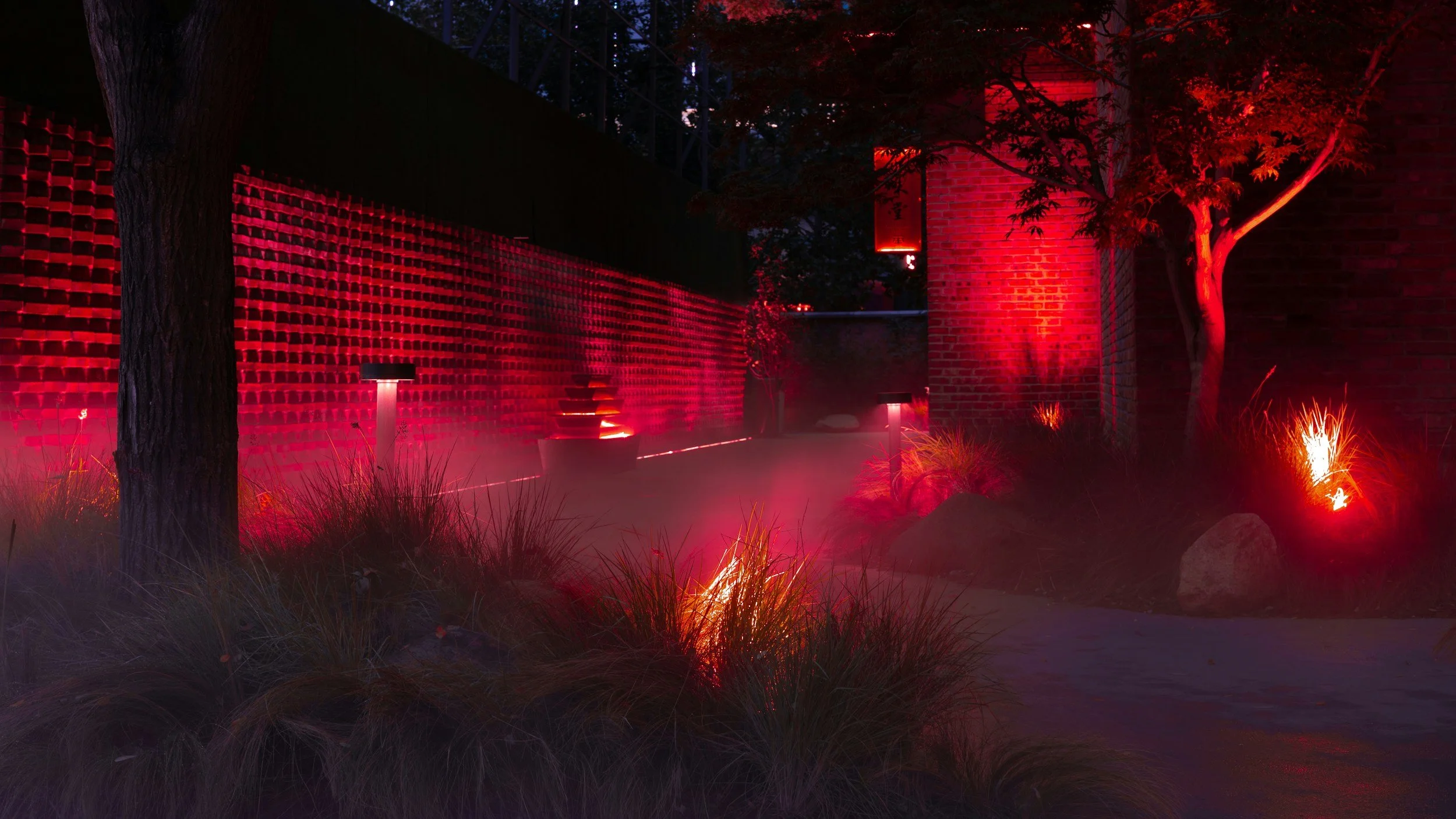
Landscape Lighting
Lighting for Evenings Spent Outside
Landscape lighting affects more than visibility. It changes how people move through the yard, where they feel comfortable spending time, and which areas actually get used in the evening.
A well-lit walkway makes moving between the house and the patio feel natural. Subtle lighting near stairs or grade changes reduces trip hazards without drawing attention to the fixture itself. Around seating areas, lower, warmer light creates a space where people want to linger rather than head inside once it gets dark.
Our approach is to place lighting where it supports how the space is used, rather than lighting everything evenly. That means thinking through evening movement, sightlines, and comfort so the yard works just as well at night as it does during the day.
Functional Lighting for Movement and Safety
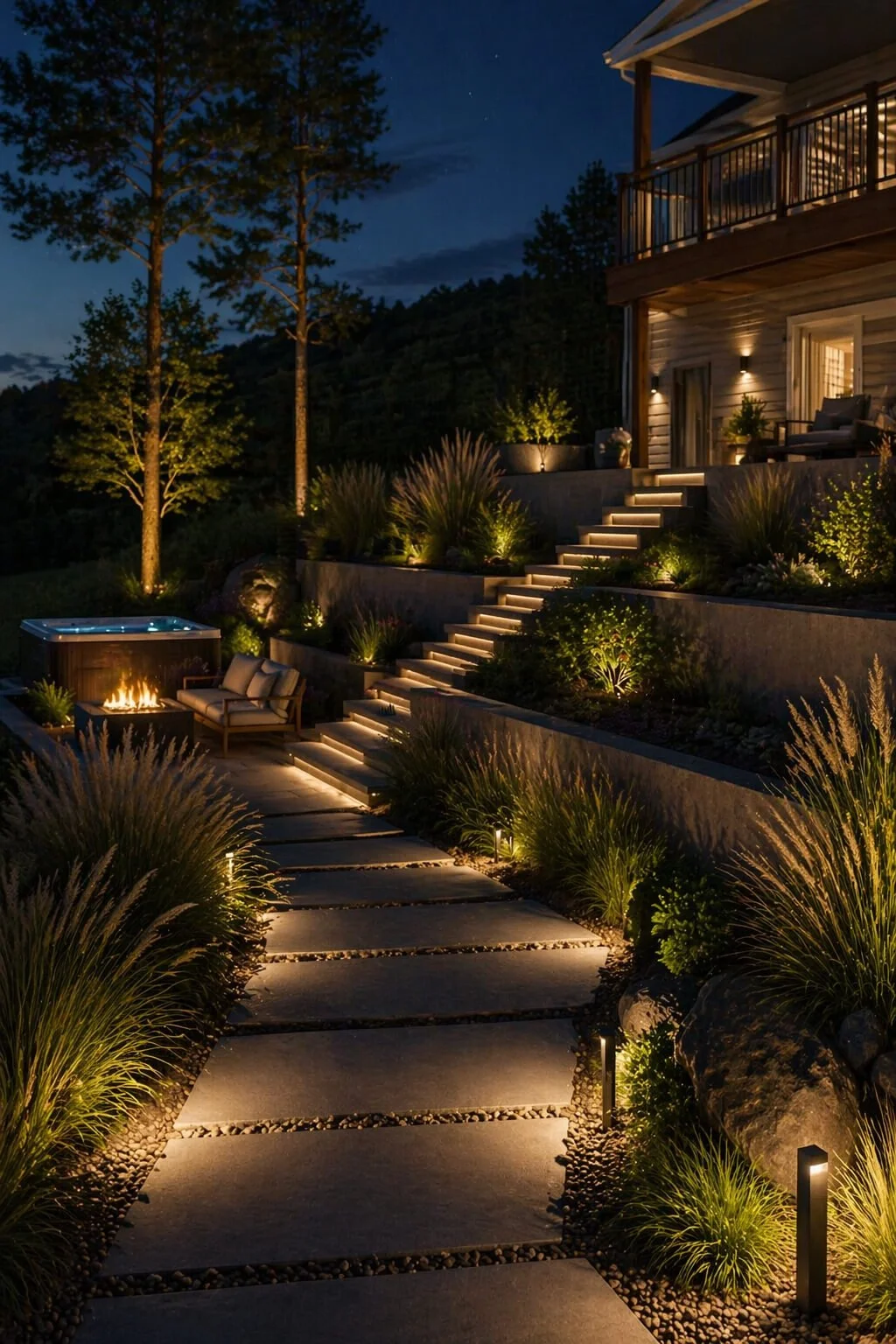
Functional lighting focuses on how people move through the yard after dark. Paths, stairs, grade changes, and transitions between spaces all need to be readable without drawing attention to the light itself.
This often includes:
Path lighting that guides movement without glare
Step and stair lighting that makes elevation changes clear
Low-level lighting near entries, gates, and access points
Good functional lighting is subtle. It’s there when you need it, but it doesn’t overpower planting or architectural features. The goal is to make movement safer and easier, not add brightness for its own sake.
Accent Lighting for Features and Focal Points
Accent lighting defines which parts of a landscape are noticeable at night. It draws attention to specific features and helps the yard feel intentional after sunset.
Accent lighting is often used to:
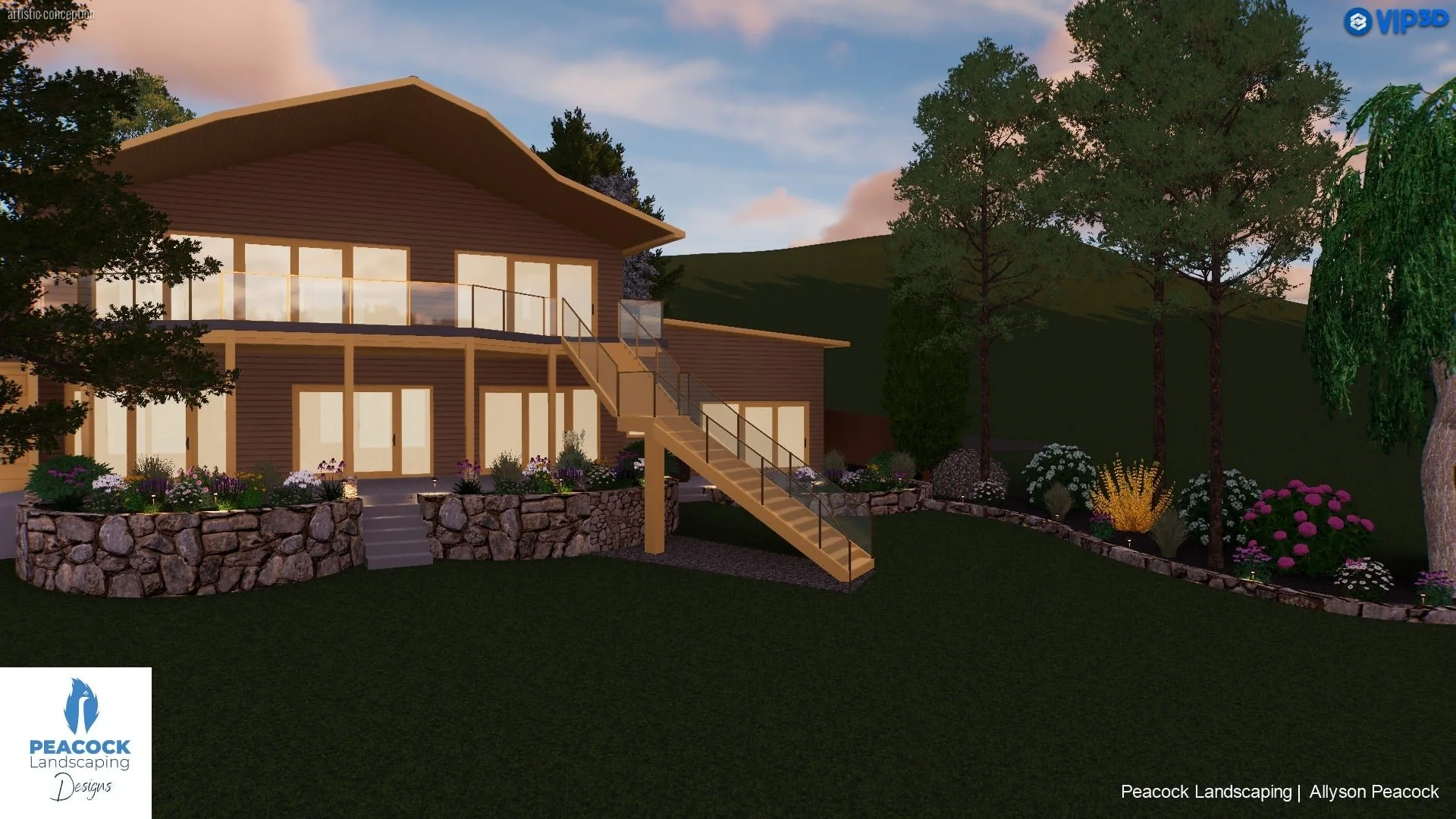
Highlight trees, stonework, or textured planting
Add depth along retaining walls or garden edges
Create visual anchors near patios or seating areas
Rather than lighting everything evenly, accent lighting creates focal points. A subtle garden light or a softly lit wall can give the entire yard a sense of structure once daylight fades.
This type of lighting works best when it’s restrained. A few well-placed fixtures tend to have more impact than trying to illuminate the entire space.
Common Landscape Lighting Applications
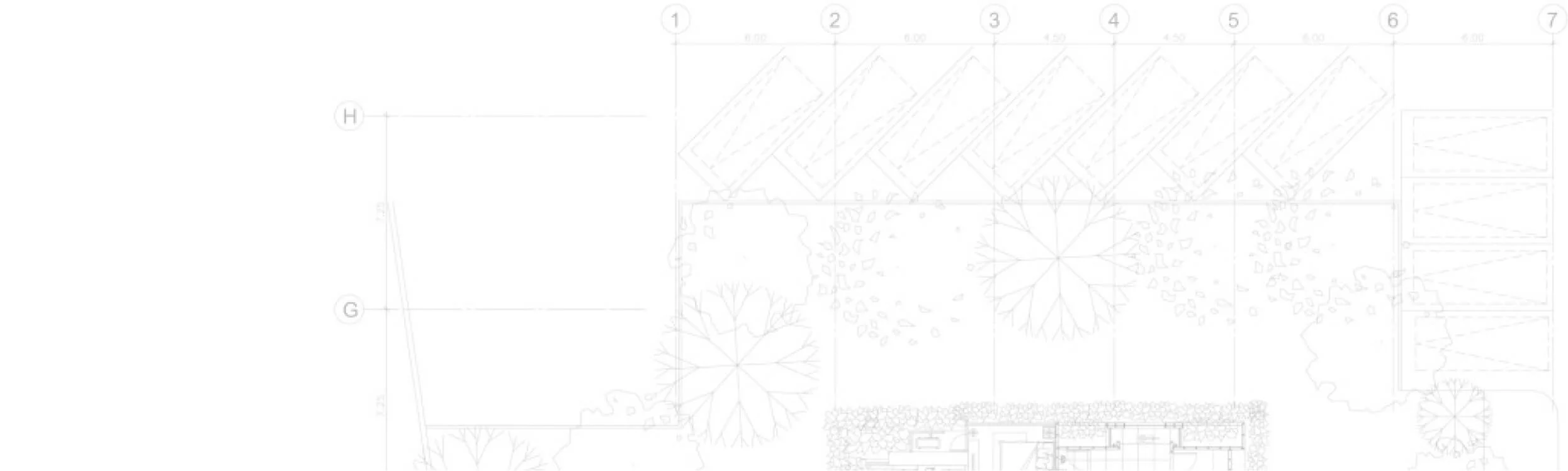
Lighting requirements often change from one part of the yard to another, depending on how the space is used in the evening.
Pathways and Walkways
Low-profile lighting along walkways helps guide movement through the yard without drawing attention away from planting or hardscape. These lights make it easier to move between the house, patio, and other areas while keeping the overall look subtle and uncluttered.
Steps and Changes in Elevation
Stairs, landings, and grade changes benefit from integrated lighting that makes elevation shifts stand out without being harsh. Built-in step lights or discreet downlighting improve safety while keeping the lighting visually quiet.
Patios and Seating Areas
Lighting around patios and seating areas keeps these spaces comfortable and usable into the evening. The focus is on softer, balanced light that supports conversation and relaxation rather than flooding the area with brightness.
Planning Lighting That Feels Natural
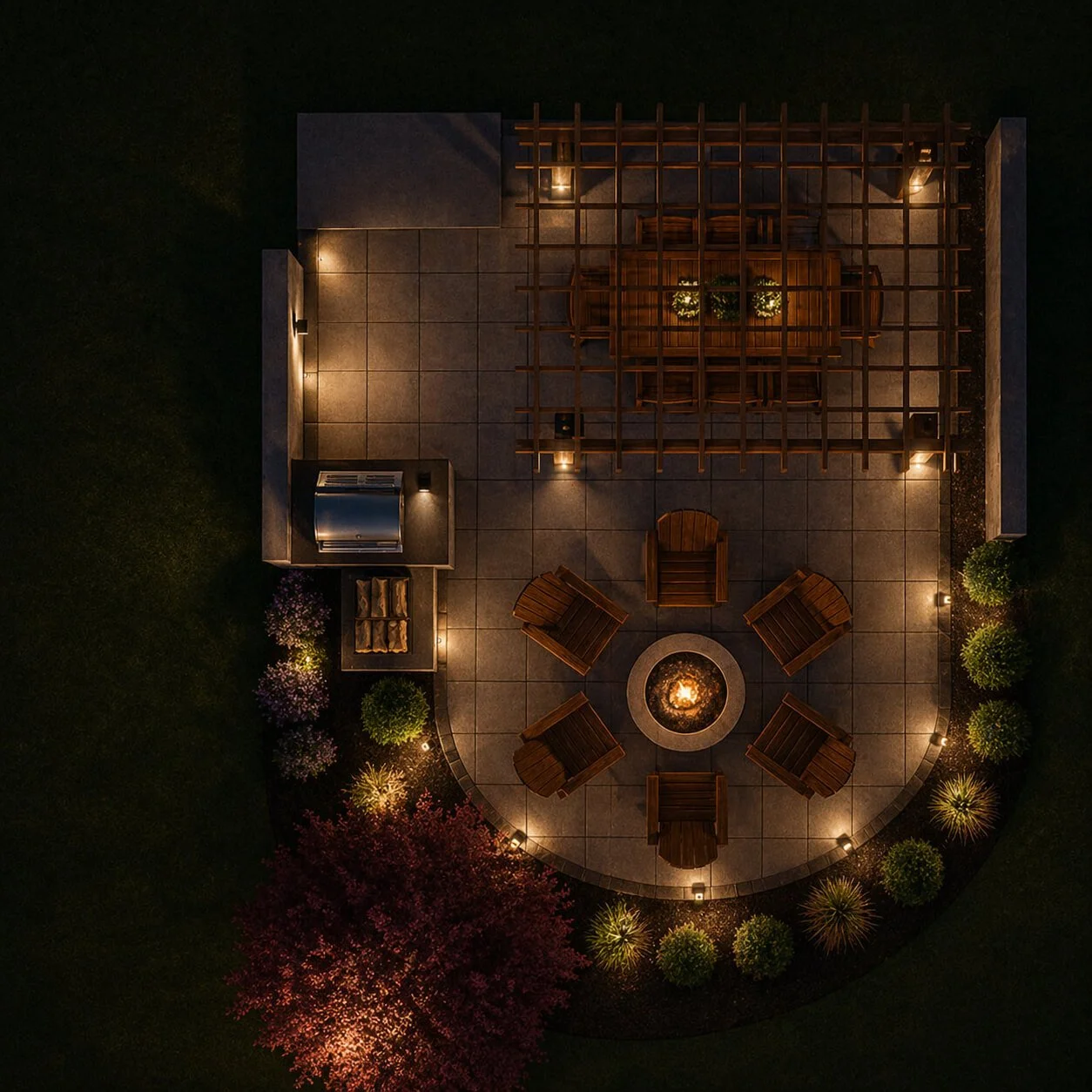
Landscape lighting needs to make sense both day and night. Fixture placement, beam direction, and light temperature all affect how natural the space feels after dark, and how visible the fixtures are during the day.
When planning lighting, we consider:
Where people actually sit, walk, and gather in the evening
How light interacts with planting, stone, and vertical surfaces
Sightline’s from inside the house looking out at night
Avoiding glare, harsh contrasts, and over-lit areas
Lighting is most successful when it supports the layout that’s already there. When it’s planned alongside patios, walkways, planting, and outdoor living areas, the yard feels complete instead of pieced together.
Featured Projects
A look at recent projects shows how our work comes together across different properties and project types.
Tell Us About Your Project
Not every project starts the same way. Choosing the right first step helps set expectations and keeps the process moving smoothly.
Start Your Design
Best for larger landscape projects where lighting is planned alongside other features.
Start Your Estimate
Best for adding lighting to an existing yard or smaller stand-alone projects.